From November 14 to 16, 2025, the 27th China International Hi-Tech Fair (CHTF), themed “Technology Empowers Industry, Integration Creates the Future,” was held in Shenzhen. The exhibition covered 400,000 square meters with numerous distinctive exhibition zones. National key projects, tech giant industrial chains, international scientific and technological achievements, provincial and municipal achievements, research institutes and universities, national key laboratories, biotechnology, Shenzhen’s scientific and technological achievements and future cutting-edge technology zones focused on core innovations, fully presenting top technologies and trends in various fields. Zones for new quality productive forces, low-altitude economy and commercial aerospace, semiconductors and integrated circuits, consumer electronics, intelligent manufacturing and robotics, AI and big data, digital energy and clean energy, and cross-border e-commerce gathered cutting-edge products and technologies, providing new ideas for industrial development.
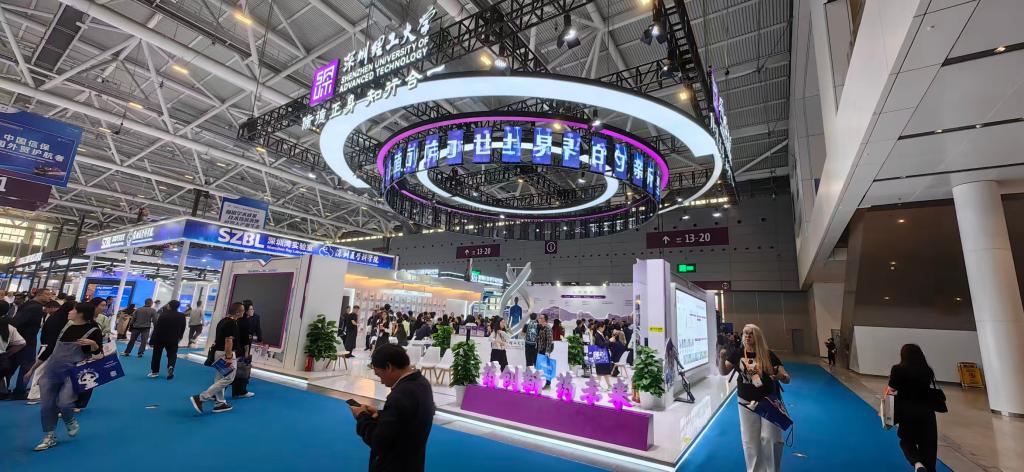
In the Research Institutes & Universities — Industry-Education Integration Pavilion,Shenzhen University of Advanced Technologyexhibited myoelectric testing equipment, non-invasive ultraviolet phototherapy instruments, fully automatic cell detectors and other devices, outlining the prototype of the “Future Space Hospital.”
“Global competition in space exploration is increasingly fierce. We focus on tackling the health challenges faced by astronauts in space,” said Xu Zhiming, Executive Director of the Future Medical Center ofSUATand initiator of the Future Space Hospital. He introduced that a number of cutting-edge medical projects have completed space tests and will serve scenarios such as space stations, lunar landings, Mars exploration and future space travel.
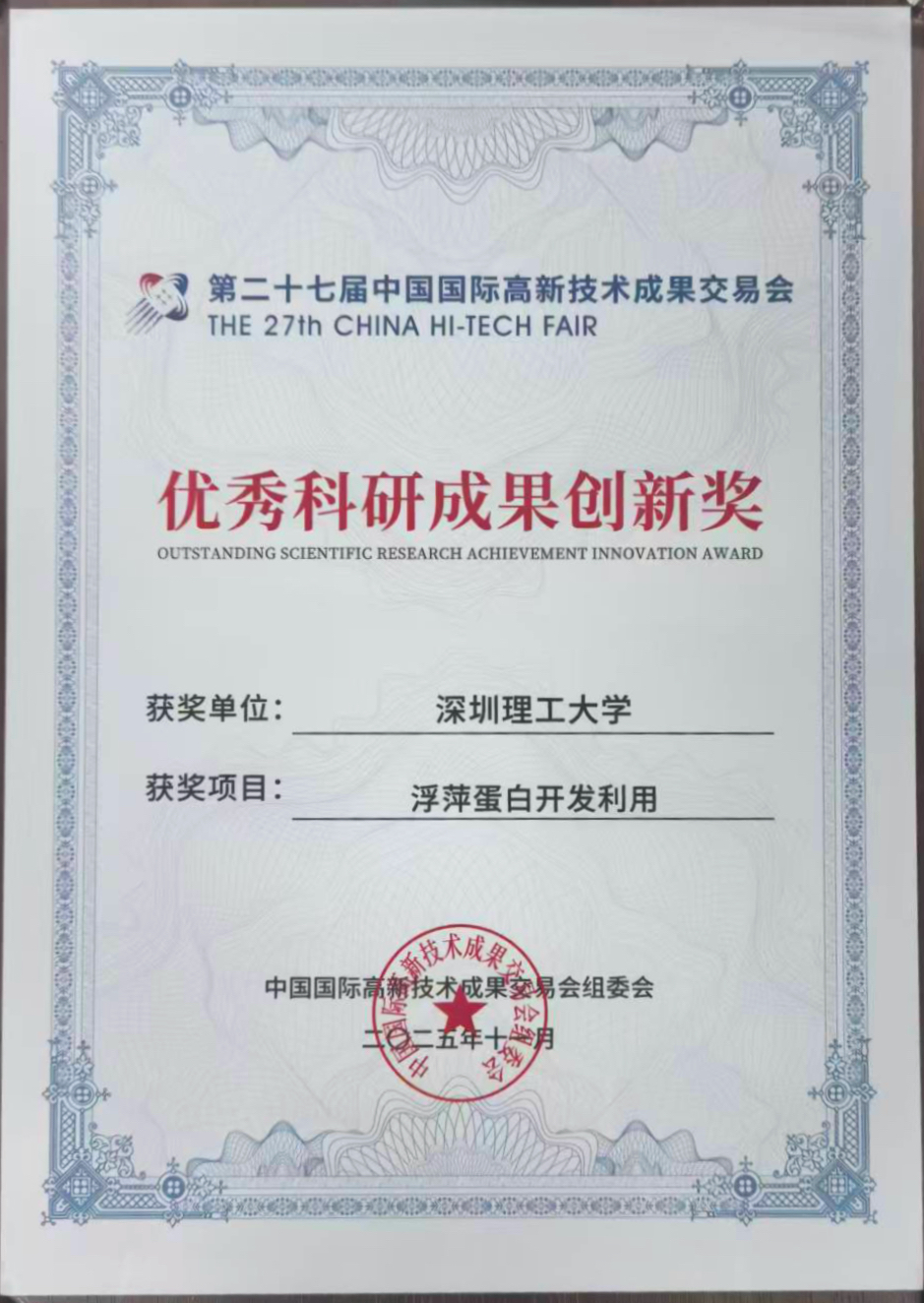
The Duckweed and Microalgae Miniature Space Cultivation Device exhibited by Professor Yang Zhenbiao’s team at the CHTF won the “27th CHTF Excellent Scientific Research Achievement Innovation Award.”
The device shows outstanding potential and significant advantages in ensuring food supply for astronauts in space exploration. It innovatively adopts a dual-spectrum design with flexibly adjustable light intensity. This core technological breakthrough precisely matches the growth needs of duckweed and microalgae in the special space environment, greatly improving photosynthetic efficiency and growth rates, effectively enhancing their growth capacity in space, and laying a key technological foundation for the continuous production of fresh high-protein plant food. Meanwhile, the structural design emphasizes stability and reliability. After rigorous tests under space conditions such as pressure, weightlessness, vibration, and radiation, it still maintains excellent performance, fully verifying its adaptability and durability under extreme space environments and providing solid safety support for future practical space applications. Looking ahead, the prototype has significant room for optimization and upgrading. Based on the existing technical framework, process parameters can be further optimized, system design improved, and production capacity gradually scaled up. It can not only meet astronauts’ demand for fresh high-protein food in short-term space missions, but also provide a stable and sustainable source of fresh plant protein for long-term space travel, space station residence and even deep-space exploration missions. It solves the core problem of food supply in space exploration and is of great significance to promoting the development of human space exploration.
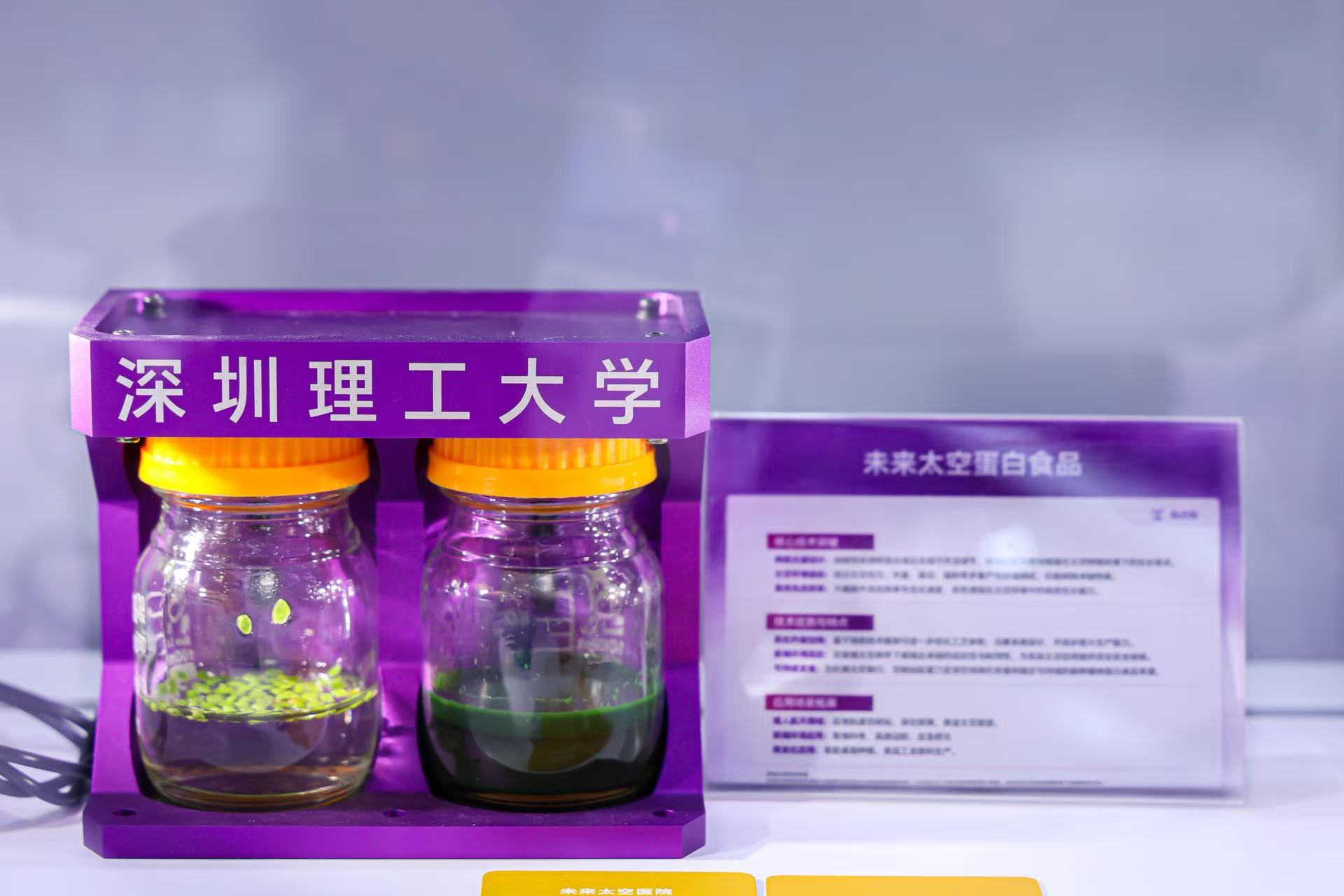
The Duckweed and Microalgae Miniature Space Cultivation Device has wide and precise application scenarios. It covers core manned spaceflight scenarios such as low-Earth orbit space station residence, deep-space exploration (lunar/Mars missions) and commercial space travel, providing fresh high-protein food for astronauts and tourists and reducing supply costs. It can also be extended to ground extreme environments such as polar scientific expeditions, high-altitude border defense and emergency disaster relief, solving nutrition supply problems in extreme scenarios. It can also be transformed into household desktop planting equipment and food industry raw material production modules, entering the high-end health consumption and functional food market. Its market potential is considerable: driven by global manned exploration programs, the domestic segmented market in the aerospace field can reach a scale of 10 billion yuan; the ground special market will gradually scale up with policy support; the commercial consumer market (desktop planting, microalgae protein) has an annual revenue potential of over 500 million yuan. Meanwhile, core technologies can form a dual profit model through cross-field output and international aerospace market cooperation, with significant future growth potential.




 Transfer